













How Does an Accelerated BSN Differ from a 3-Year BSN Program?
An accelerated BSN, or ABSN, is a second bachelor’s degree for students who already hold a degree in another field. A three-year BSN program is a first bachelor’s degree that shortens the typical four-year timeline, so you can start without a previous degree. Both lead to a Bachelor of Science in Nursing, but they differ in who can enroll, how long they take, and what coursework they include.
Who can enroll in an ABSN program?
ABSN programs, also called second-degree BSN programs, serve adults who have completed a bachelor’s or graduate degree in a non-nursing discipline. According to a May 2026 fact sheet from the American Association of Colleges of Nursing (AACN), these programs build on your previous learning experiences to shorten your time in school. Fast-track baccalaureate programs typically take 12 to 18 months to complete, including prerequisites. AACN also reports that ABSN students complete the same number of clinical hours as students in traditional entry-level programs.

How is a BSN completed in three years?
A three-year BSN program is a first bachelor’s degree, so you don’t need a previous degree to enroll. Traditional BSN programs typically take four years, while three-year programs shorten the timeline, often by holding classes year-round.
Your coursework includes both general education and nursing courses. If you’ve already taken college classes, transfer credits may reduce the number of general education courses you need. ABSN programs, by comparison, typically focus almost entirely on nursing, since a prior bachelor’s degree usually covers most general education requirements. Arizona College of Nursing offers a three-year BSN program with no prerequisite coursework required to start.
Do both programs lead to RN licensure?
Yes, ABSN and three-year BSN programs both award a Bachelor of Science in Nursing. Graduates of either option can pursue RN licensure, which requires passing the NCLEX-RN exam.
Which option fits your background?
If you have a bachelor’s degree in another field, an ABSN may be an option. A three-year BSN program doesn’t require a previous degree, so you can start with a high school diploma or some college credits. Depending on the courses you’ve taken, some of your credits may transfer. Talking with an admissions advisor can help you decide which program best matches your education and goals.
How is the Arizona College of Nursing curriculum organized?
Arizona College of Nursing’s BSN program combines classroom learning, hands-on simulation, and clinical rotations. You’ll typically start with general education and healthcare foundational courses before moving into your nursing core. Our simulation labs let you practice patient care in settings that replicate exam rooms, ER bays, and delivery suites. Clinical rotations place you in a variety of healthcare settings, where (under the supervision of qualified nursing faculty), you gain caregiving experience while working with medical professionals.
Course format depends on the type of course you’re taking. Courses with a clinical component are held in person so you can develop the hands-on patient care skills nursing practice requires. Some nursing courses without a clinical component are available fully online in an asynchronous format, allowing you to learn on your own schedule. General education requirements follow a blended structure, combining evening classes with virtual sessions for added scheduling flexibility.

Success coaches can support you as you prepare for the NCLEX-RN exam, and NCLEX-RN prep is built into the curriculum. Arizona College of Nursing’s BSN program is accredited by the Commission on Collegiate Nursing Education (CCNE).
Admission Requirements Side by Side
Admission standards differ between the two options, especially around prior education and coursework. Requirements for both ABSN and three-year BSN programs vary from school to school. Below, you can compare typical ABSN standards with the requirements at Arizona College of Nursing.
Most ABSN programs require:
- Prior degree: A bachelor’s or graduate degree in a non-nursing field
- Prerequisites: Required courses, often in science and math
- GPA: Typically a minimum of 3.0, according to AACN
- Program length: Typically 12 to 18 months, including prerequisites
Arizona College of Nursing requires:
- Prior degree: Not required
- Prerequisites: No prerequisite coursework
- GPA: Proof of a high school diploma with a cumulative GPA of 2.75 or higher or one of several recognized high school equivalency tests with a Passing score, e.g., GED
- Entrance exam: Weighted composite of 60% or higher on the HESI A2 assessment
- GPA waiver: Available with a HESI A2 weighted composite score of 75% or higher, or with a GPA of 2.75 or higher in at least 12 college credits from an institution accredited by a CHEA-recognized agency
- Program length: Three years, or less with qualifying transfer credits
Get Personalized Guidance on Your Options
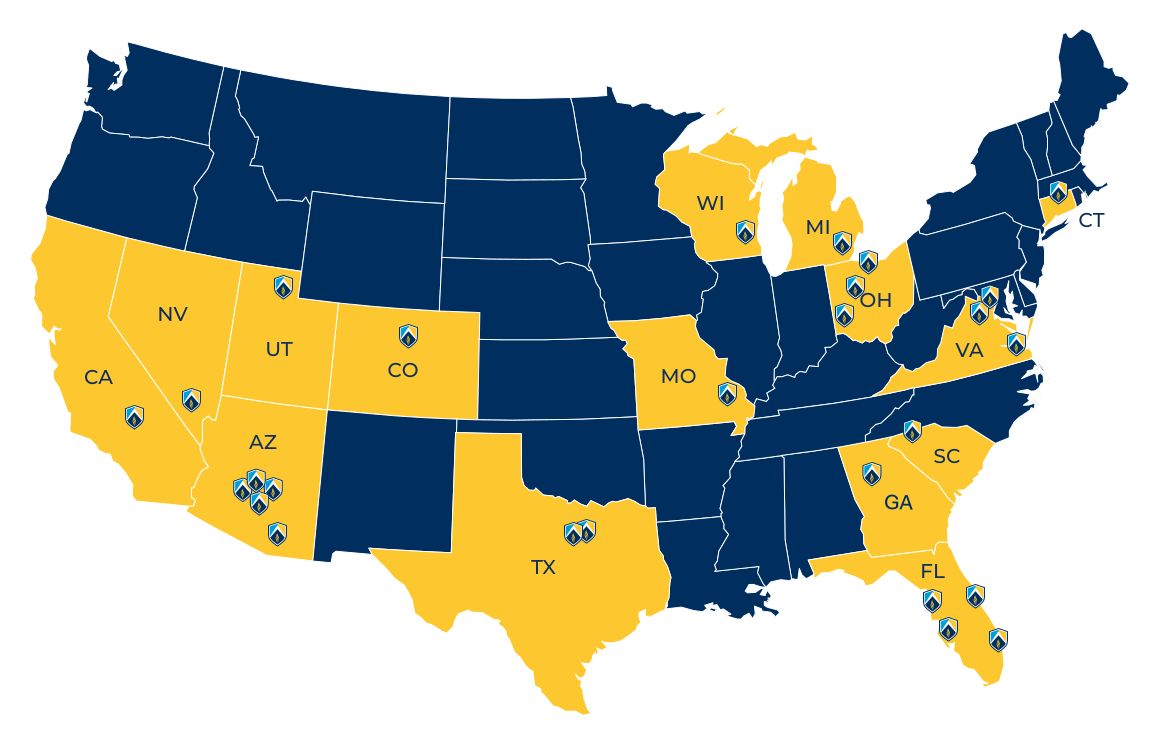
Every student’s education history is different, and our admissions team can help you understand how your background fits our program. Visit our Campus Locations page to contact your local campus. Our transfer of credit team can also review your transcripts and share how your past coursework may apply toward a BSN degree.
Read more about Arizona College of Nursing’s three-year BSN program.