














Nursing Career Frequently Asked Questions
With a BSN from Sarasota and an RN license earned through the NCLEX-RN, you can pursue roles on hospital units, in specialty care, in leadership, or in community health. In 2025, RNs across the U.S. held about 3.5 million jobs. Some of the largest employers were:
- Hospitals (59%)
- Ambulatory healthcare services (19%)
- Nursing and residential care facilities (6%)
- Government (5%)
- Educational services; state, local, and private (3%)
A first job in medical-surgical or emergency department nursing is common, and experienced nurses may later move into other specialties or leadership roles. Our RN program in Sarasota is designed to prepare you for your first nursing role.
See where a bachelor's degree in nursing can lead.
Updated 10/2026. Source: https://www.bls.gov/ooh/healthcare/registered-nurses.htm#tab-3
Yes, RN jobs in Florida are projected to grow 13% from 2024 to 2034, rising from 220,290 RNs employed in 2024 to about 248,000. U.S. RN employment is projected to rise 6% between 2025 and 2035, with roughly 180,800 openings per year.
Updated 10/2026. Source: https://www.onetonline.org/link/localtrends/29-1141.00?st=FL
For RNs who want to advance into leadership, becoming a nurse manager is an exciting next move after gaining clinical experience. Nurse managers lead in settings like hospitals, long-term care facilities, outpatient care centers, skilled nursing facilities, and home health care services.
Qualifying for a nurse manager role in Florida typically involves three requirements. First, you'll need at least a BSN degree. Next comes RN licensure through the NCLEX-RN. Last is clinical experience, with many healthcare facilities asking for at least five years as an RN.
Nursing Program Questions at Arizona College of Nursing – Sarasota
AZCN Sarasota's three-year BSN program includes courses in topics such as clinical thinking, community health, critical care, gerontology, leadership, surgical care, obstetrics, pediatrics, and psychiatric care. These subjects make up part of your nursing education at our RN school.
You won't need nursing assistant experience to enroll at Arizona College of Nursing – Sarasota. Many successful students start nursing school with no healthcare background at all. Our BSN program is built to give you the foundational knowledge and clinical training required to become a registered nurse.
If you'd like hands-on exposure first, working as a nursing assistant before or during your studies is an option, though it's not required for admission. Passion for helping others and a commitment to learning count for more.
Arizona College of Nursing – Sarasota doesn't offer an LPN to BSN or LPN to RN bridge program. Your LPN license is no barrier to enrolling in our RN program, where you can earn a BSN in just three years. Clinical training is where prior LPN experience can be especially valuable, though it can help throughout your coursework. Mention your LPN work when you talk with admissions so they can explain what it means for your BSN studies.
You can bring qualifying general education transfer credits to AZCN Sarasota, where they may shorten your path through our BSN program to three years or less. Applying them can mean a shorter, less expensive path to graduation.
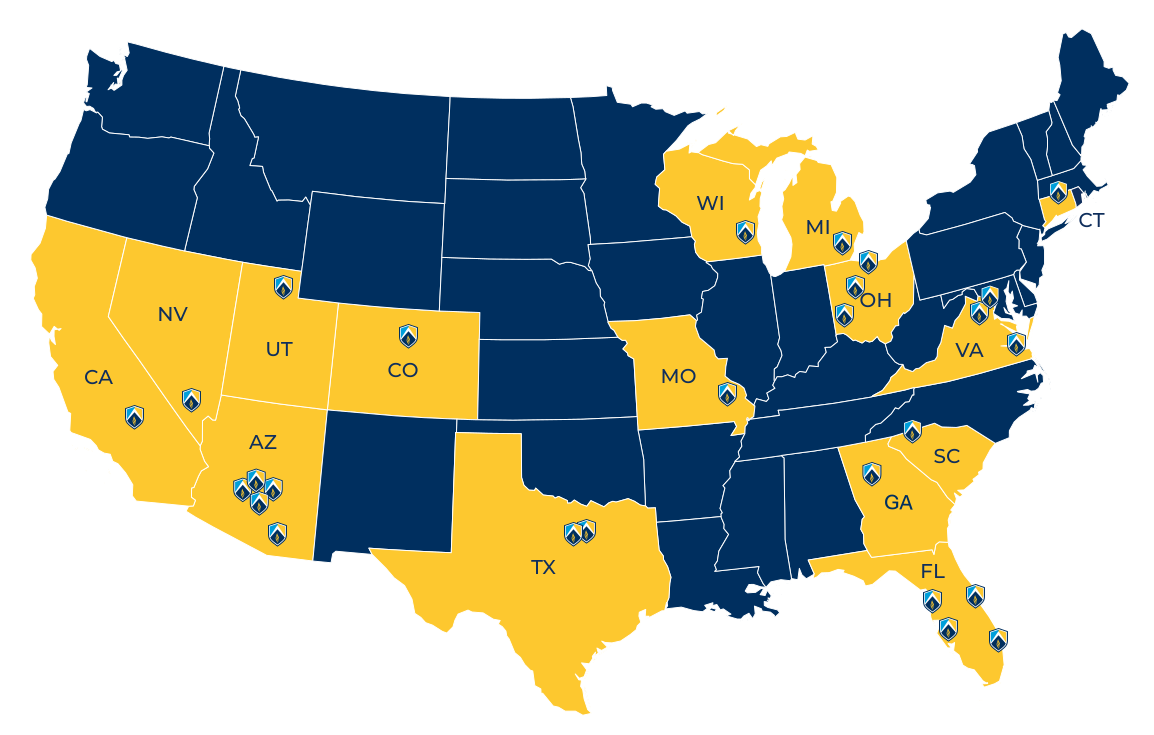
Your local campus, which you can reach through our Campus Locations page, can answer questions about qualifying transfer credits and credits earned through college-level credit test scores. After a transcript review, our admissions team will let you know specifically which past coursework might count toward a BSN degree.
Learn about credit transfer requirements.
AZCN's Sarasota campus offers night classes for general education, which is how your BSN degree program begins. A convenient on-campus/online hybrid format is also available for some general education courses, and each student's schedule may vary based on prior academic experience.
Holding general education courses in the evening means you don't have to rework your whole schedule on day one. Your core nursing courses, taken later on, meet during the daytime.
Students who qualify can access financial aid at Arizona College of Nursing – Sarasota. Depending on eligibility, students of any age or background may be able to use options such as:
- Federal student loans
- Federal PELL and SEOG grants
- Eligible State-based grant programs
- Private educational loans
- Military veteran educational benefits (ex: Post-9/11 G.I. Bill®)
You may also qualify for scholarship opportunities through Arizona College of Nursing. Visit our financial aid page for details.
General Nursing College FAQs
A BSN, or Bachelor of Science in Nursing, is an undergraduate degree built to give students the training and studies needed for a successful nursing career. Students take a mix of general education classes and advanced nursing studies. Having a BSN can also make it easier to find a nursing position in the state and city where you want to work.
Becoming a registered nurse (RN) in Sarasota starts with graduating from a nursing program approved or accredited by the Florida Board of Nursing. Passing the NCLEX-RN comes next, and it's required for your RN license.
A typical BSN takes four years when you're starting from scratch. At Arizona College of Nursing – Sarasota, you can earn your BSN in three years, and qualifying transfer credits from prior college courses or a degree in another field may help you finish even faster. To help you get ready for licensure, our RN school weaves NCLEX-RN exam preparation into your coursework and clinical experience. For a timeline based on your background, contact an admissions representative at our Sarasota campus.
Yes, an accelerated BSN differs from a BSN program, mostly in its audience and its pace. Either path ends with a Bachelor of Science in Nursing and eligibility to pursue RN licensure through the NCLEX-RN.
Students who already hold a bachelor's degree in another field are the audience for accelerated BSNs, which are also called ABSNs or second-degree BSNs. According to the American Association of Colleges of Nursing, these programs usually take 12 to 18 months, including prerequisites. Most require prerequisite science courses and a minimum GPA before you can enroll.
If you don't have a bachelor's degree yet, a BSN program is the usual route. Expect about four years from scratch, with admission requirements that vary by school. AZCN Sarasota's three-year BSN skips the prior-degree and prerequisite-coursework requirements, and qualifying transfer credits may shorten your timeline.
Training and responsibility separate nursing assistants from RNs in Florida. Nursing assistants handle basic patient care, including help with daily activities, vital sign monitoring, and mobility assistance, under the supervision of RNs and other healthcare professionals. RNs, who typically have more advanced training, develop and implement patient care plans, administer medications, perform complex nursing procedures, and oversee and coordinate the care provided by nursing assistants and other healthcare staff.
Hospitals, nursing homes, clinics, and other healthcare settings across Florida hire nursing assistants, and the role often serves as a starting point for people exploring nursing. Many nursing assistants later earn a BSN and become RNs. At AZCN Sarasota, our BSN program combines comprehensive education and clinical experience to help you advance your career.
LPN school and BSN school in Florida lead to different nursing roles, and the education requirements for each vary significantly. LPN programs, sometimes called LVN programs in other states, typically take one to two years and prepare you for entry-level roles as a Licensed Practical Nurse. LPNs provide basic nursing care under the supervision of registered nurses (RNs) and physicians.
On the BSN side, programs usually run three to four years and prepare you to become an RN. You'll receive a comprehensive nursing education that opens up a variety of nursing areas. Registered nurses, who typically need an ADN or a BSN, take on a broader scope of practice that includes patient care planning and diagnostic testing.
Which program fits best comes down to your career goals. RNs generally have more opportunities for advancement and higher earning potential. Our admissions team can tell you how our three-year BSN program in Sarasota can help prepare students for a career as an RN.
A Bachelor of Science in Nursing (BSN) offers a higher level of training and education than an Associate Degree in Nursing (ADN). Along with a broader educational foundation, BSN students gain more practical clinical exposure. Those advantages appeal to employers and can lead to additional job growth opportunities, including employment at Magnet-designated hospitals.
Magnet designation comes from the American Nurses Credentialing Center (ANCC), and hospitals that earn it are highly sought after for their excellence in nursing, patient care, and professional development. These hospitals typically hire nurses with a BSN or higher, in keeping with their commitment to the highest standards of care and better patient outcomes.
Choosing between the NCLEX-RN and NCLEX-PN in Florida depends on the license you're pursuing. BSN and ADN graduates sit for the NCLEX-RN to become registered nurses, while LPN and LVN graduates take the NCLEX-PN to become practical/vocational nurses.
Both exams are developed by the National Council of State Boards of Nursing (NCSBN) and required for nursing licensure in the United States. As standardized tests used across all states, they help ensure consistent nursing practice standards. A passing score confirms you meet the minimum competency standards required for entry-level nursing practice and lets you apply for your Florida nursing license.
LPNs typically work under the supervision of registered nurses or physicians. RN licensure in Florida, by contrast, comes with greater autonomy, higher-level clinical responsibilities, and more opportunities for career advancement.
Budgeting to become a nurse in Florida means planning for an accredited nursing program plus Florida's licensing fees. If you're applying for licensure by examination, budget for:
- A $110 application and licensing fee paid to the Florida Board of Nursing
- $200 for the NCLEX, paid to Pearson VUE
- Livescan fingerprinting, with fees that vary by provider
Florida allows three NCLEX-RN attempts before you'll need remedial training. Three failures at the same exam level (RN or LPN), whether in Florida or another jurisdiction, trigger a requirement to complete a remedial course approved by the Florida Board of Nursing. That course includes both classroom and clinical components, and the provider must submit proof of completion directly before you can be approved to test a fourth time.
Source: https://floridasnursing.gov/frequently-asked-questions/