















You’ve made it this far. You’ve gone through the fundamentals, the late nights, and the countless hours of studying. Now, you’ve reached what many consider the most pivotal and challenging phase of your journey at Arizona College of Nursing: Semester 7.
In this semester, the curriculum shifts from foundational concepts to advanced, high-acuity topics. Here, you will be pushed to synthesize everything you’ve learned and prepare for your future as a nurse.

“At the very beginning of Semester 7, I felt very overwhelmed. I [had] been hearing how semester 7 is extremely stressful and difficult, and I was over stressing the semester,” said Alexandria Rodriguez, a student at Arizona College of Nursing’s Phoenix Campus. “I have 6 weeks left in Semester 7. However, I don’t feel so overwhelmed! Though this is my busiest semester, time management is key.”
It’s a demanding stretch, but you don’t have to go through it alone. This guide is here to help you understand the challenges ahead and equip you with strategies to succeed.
What coursework do you take in semester 7 of nursing school?
The academic load in Semester 7 is intense and demanding. It is designed to prepare you for the complexities of modern healthcare. At Arizona College of Nursing, for example, the curriculum includes courses like:
Acute & Chronic Health Disruptions in Adults II
This course is a vital step up from previous semesters, focusing on the management of complex, high-acuity health issues. You are expected to understand advanced disease processes and the corresponding nursing interventions.
Pharmacology II
Building on the foundation of pharmacology, this course delves into more specialized and potent medications. You must master drug classifications, mechanisms of action, and potential side effects for a wide range of medications used in acute care settings.
Leader in Quality Care & Patient Safety II
In this course, you begin to transition into a future professional role. The class focuses on the nurse’s responsibility in ensuring patient safety, improving quality of care, and navigating healthcare systems.
Evidence-Based Practice II
You are expected to learn to critically evaluate research and apply evidence to their clinical decision-making in this course. This is a crucial skill for becoming a competent and informed registered nurse.
Community Health Nursing Theory & Application
In this course, you’ll focus on applying the professional nursing knowledge and skills you have learned as a critical component of community health. A further emphasis will be placed on addressing social determinants of health as a member of an interprofessional team, strengthening your critical judgement skills as well as their ability to focus on evidence-based decision making in practice.
” [At the start, I was] super nervous. We were told it’s the hardest semester and you’re in scrubs 6 days a week. When I officially completed Semester 7, [it felt] like a weight was lifted off my shoulders,” said Alexandria Hernandez, a student at Arizona College of Nursing’s Fort Lauderdale campus.
What are clinical rotations like in Semester 7?
In Semester 7, you are challenged to put your knowledge into practice and apply your skills during clinical rotations. The hours are often longer, and the expectations are higher, as you are working with real-life scenarios. At this point in your college career, you are not just observing but actively participating in patient care.

During this semester, you’ll enhance your critical judgment by learning to anticipate patient needs and recognize subtle changes in a patient’s condition, allowing you to make rapid, sound clinical decisions. Under the guidance of instructors and preceptors, you’ll develop greater autonomy, which can be both exciting and intimidating. This is a critical step toward becoming an independent nurse and learning how to work independently.
The clinical environment in Semester 7 is designed to prepare you for the real world, setting you up for your first job as a registered nurse and pushing you to think and act like a professional. You’ll work through real-life scenarios and apply what you’ve learned throughout the program.
“It is important to master prioritization and time management. Semester 7 is workload on top of clinical days, [so] stay ahead,” explained Stephanie Palacio-DelosSantos, a student at Arizona College of Nursing’s Las Vegas campus.
How do you manage NCLEX anxiety during Semester 7?
Perhaps the most significant source of stress in Semester 7 is the looming presence of the NCLEX-RN exam. The final exam for the semester often functions as a benchmark for NCLEX readiness, and the pressure to perform well is immense.

This is the time to begin focused NCLEX prep. You’re encouraged to dedicate significant time outside of classes and clinicals to NCLEX-specific study. Our campuses offer resources designed to help you prepare for the exam and improve your study skills. The NCLEX requires a comprehensive understanding of all nursing concepts learned throughout the program, not just the current semester’s material. Use this semester as an opportunity to review and solidify your knowledge from all previous courses.
Managing stress is equally important. The combination of an intense curriculum and the high-stakes nature of the NCLEX can lead to burnout and mental fatigue. Remember to take care of yourself using the self-care strategies below.
How can you succeed in the hardest semester of nursing school?
Navigating this challenging phase of nursing school requires a plan. Here is how you can make it through to the finish line:
Master Time Management and Study Strategies
Create a detailed study schedule, prioritize tasks, and use active recall methods to retain information.
Leverage Campus Resources
Don’t be afraid to ask for help! Arizona College of Nursing offers many resources to our students to set them up for success. Set up time to connect with our NCLEX Success Specialist, meet with a student achievement coach that can help build a plan for you, and visit faculty during their office hours. It is important to seek help and not suffer in silence.
Prioritize Self-Care
Self-care is a necessity. Make sure to incorporate short breaks into your study schedule, get enough sleep, eat healthy, and exercise regularly.
Find Your Support System
Remember, you are all in this together. Make sure to connect with your classmates, family, and faculty.
“Semester 7 really taught me to understand the importance of time, and to really appreciate self-care. Though you will be busy, just remember it is temporary, and the end goal is coming real soon,” added Alexandria Rodriguez.
It is important to remember that this is the final stretch of nursing school. Though difficult, the skills and resilience that you build in semester 7 will set you up and prepare you for a successful nursing career. Keep your eye on the finish line and remember that we are proud of your progress and can’t wait to celebrate with you at graduation!
Start Your Future in Nursing Today

If you’re considering a career as a registered nurse (RN), Arizona College of Nursing is here to help you pursue your dream. Our BSN program enables you to earn a Bachelor of Science in Nursing in just 3 years or less with qualifying transfer credits. We’ve helped hundreds of students to earn a BSN degree and enter the nursing profession – and we’re ready to support you on your path to becoming an RN.
Why Choose Arizona College of Nursing?
- Earn a BSN degree in 3 years or less with eligible transfer credits
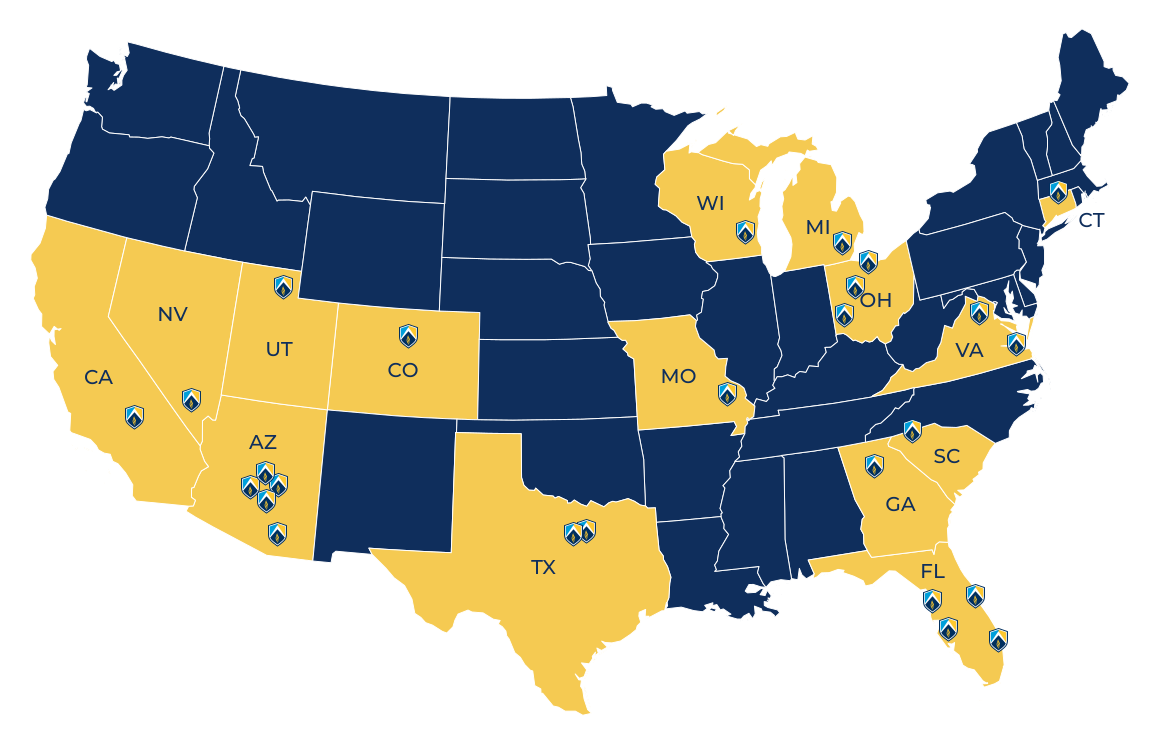
- Campus locations throughout the US
- Night classes for general education courses
- Hybrid Online/In-Person format for general education classes
- Nursing education is all we do
- CCNE-Accredited Program*
- NCLEX-RN success coaches and exam preparation class
- Financial aid available to those who qualify
Discover Your Path to a Career in Nursing
Information in this post is accurate as of December 29, 2025.
*The Bachelor of Science in Nursing (BSN) degree program at Arizona College of Nursing is accredited by the Commission on Collegiate Nursing Education (https://www.aacnnursing.org/). All Arizona College of Nursing and Arizona College campuses are institutionally accredited by the Accrediting Bureau of Health Education Schools (https://www.abhes.org/), a U.S. Department of Education-recognized accrediting agency.