











Patient Interview Tips for Nursing Students
Ready to develop your nursing communication skills with comprehensive clinical training?
As a nursing student, you’ll discover that nursing is not only about physical care, it’s about emotional care. Nurses utilize empathy and skillful communication to connect with patients during some of the most difficult times in their lives. After all, being able to connect with others is what makes us human. Being able to connect with patients is what makes us nurses.
Mastering patient interview skills is the cornerstone of nursing practice, and these essential patient interview tips for nurses will help guide your success. During your nursing education, you’ll learn therapeutic communication techniques for nurses that will help create strong nurse-patient relationships. As you develop patient-centered communication skills and effective patient interviews, you’ll be prepared to improve patient care outcomes.
1. What are the most important patient interview tips for new nurses?
The most important patient interview tips for new nurses are to create a safe, welcoming environment, practice therapeutic communication techniques, and lean into patient-focused communication that builds trust while setting professional boundaries.
Safe environments are often made with clear communication about treatment by focusing on cleanliness. If the environment is clean, patients are more likely to trust you. According to the Journal of Health, Population and Nutrition (Tian, 2023), cleanliness of a hospital directly correlates with reduced patient anxiety.
Practicing therapeutic communication techniques such as being open and honest allows transparency to foster good relationships. Being clear about future tasks, exams, or what to expect helps patients gain trust and reduces anxiety.
To further reduce patient anxieties, utilize the nursing-out-loud technique. This means narrating what you’re doing while you do it. For example: “I’m going to raise the bed to my level so that I can better access your arm for the IV.”
When patients voice concerns, demonstrate empathy and involve them in care decisions. Validating concerns is the top priority, followed by finding solutions. Therapeutic communication techniques for nurses are fundamental to compassionate patient care.
2. How do you build rapport with patients during interviews?
Patient interview tips for building rapport come down to four key elements: making a good first impression, using open-ended questions, showing genuine interest, and addressing concerns.
Making positive first impressions to establish patient rapport is vital for nurses. An attitude of service will foster rapport and trust because serving others gives a sense of empathy and interest. A bad first impression is hard to undo, so put your best foot forward when introducing yourself to your patients.
Patient-centered communication skills include nurses asking meaningful questions. Using open-ended questions is effective for patient interviews because it opens up dialogue and makes the patient feel accepted. Open-ended questions allow patients to give more information rather than simple yes or no responses.
Examples of open-ended questions include:
- Can you tell me how all of this started?
- What do you think helps your pain?
- How often does this affect you?
- Can you describe how you feel when you are in pain?
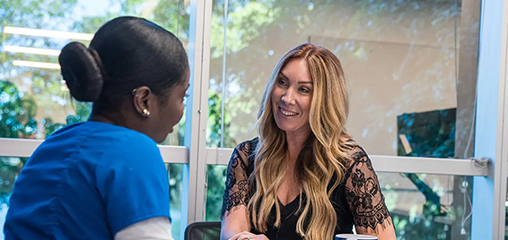
Developing strong communication skills in nursing helps you show genuine interest in patients and create meaningful connections. When your patient gives you an answer, make eye contact and give your undivided attention. Try to stop what you’re doing in the room and focus on the patient for five to ten minutes. If you have a chair or can crouch beside the patient to get on their eye level, it’s even better while listening to responses.
Addressing patient concerns strengthens nurse-patient relationships. When patients feel heard and understood, it improves the quality of care.
3. What active listening techniques work best in patient interviews?
One major patient interview tip to follow is active listening. Here are a few simple and easy active listening techniques that work best in patient interviews:
- Maintain appropriate eye contact and body language
- Restate what was heard during the conversation
- Ask for clarification to seek understanding
Maintaining appropriate eye contact and body language will improve patient interviews. Find the right balance: too little makes patients feel rushed, while too much can make them nervous. Be mindful of your body language during the interaction. Keep your body centered with the patient, especially when they answer your questions.
Non-verbal cues you should avoid include:
- Arms crossed
- Negative facial expressions (frown, disagreement, furrowed brow)
- Overly animated hand gestures
- Closed posture
Reflecting and paraphrasing patient statements helps strengthen your connection and confirm your understanding of the conversation. Most people value being heard and understood and this technique reassures patients that you care about what they say. Paraphrasing also helps you catch details you might have missed.
“I just want to make sure I am understanding you correctly. You say that your pain comes and goes, but you mostly notice it during the morning immediately after you wake up. Is this correct?”
Asking clarifying questions demonstrates your genuine interest in understanding their experience. This technique reinforces the therapeutic nature of your conversation.
“I see, so the pain is worse in the morning for about 30 minutes immediately after you wake up and start moving around.”
Active listening techniques like restating and clarification are essential for effective patient interviews. Patients feel valued when they know their healthcare provider is genuinely trying to understand them.
4. How do you handle difficult patient interview situations?
Patient interviews may become challenging when emotions run high. Handling difficult emotions such as anger or mistrust is crucial but remember that anger is often a secondary emotion masking sadness, disappointment, or fear.
Patient-centered communication skills should be maintained during conflict. The goal is to calm the patient first, then communicate logically once they’re receptive.
De-escalation techniques:
- Use clear, calm, empathetic language
- Use non-threatening body language
- Maintain distance
- Manage time constraints
- Address the underlying issue
- Collaborative problem solving
Allow patients to express emotions if they’re not violent or abusive. Once calm, you can address root issues using therapeutic communication techniques.
If de-escalation isn’t working, seek additional support immediately. Never put yourself in harm’s way. Leave the room and get assistance from specialized teams that may include mental health nurses, therapists, or chaplains.
5. What should you know about interviewing different patient populations?
Cultural competence, language, and health literacy are the most common challenges with different patient populations during patient interviews. Understanding the population prior to the interview will help the interview run more smoothly while maintaining respect and professionalism.
Nurses should be knowledgeable and respectful of other people’s cultures and beliefs during patient interviews. Cultural competence includes understanding cultural beliefs and practices while avoiding stereotypes. If your patient speaks a different language than you, complete the interview in their native or preferred language using your facility’s interpreter services.
Gauging health literacy during patient interviews helps you adjust your communication approach. As you ask open-ended questions and gather health information, you’ll see your patient’s understanding of their health and medical conditions. You can then adjust your vocabulary to maximize their understanding.
The key to successful patient and family communication is knowing the patient population you work with. Some different patient populations to consider include:
- Communicating with pediatric patients and families
- Adapting for elderly patients
- Patients from different socioeconomic backgrounds
- Patients with varying health literacy levels
- Patients with special needs or disabilities
- Patients from cultures different from your own
Each culture has different manners and etiquette expectations regarding physical touch, how you speak, and eye contact. Usually, the population where you live reflects those you serve, but not always. Make sure to understand your patient population prior to interviews.
6. How do you document patient interviews effectively?
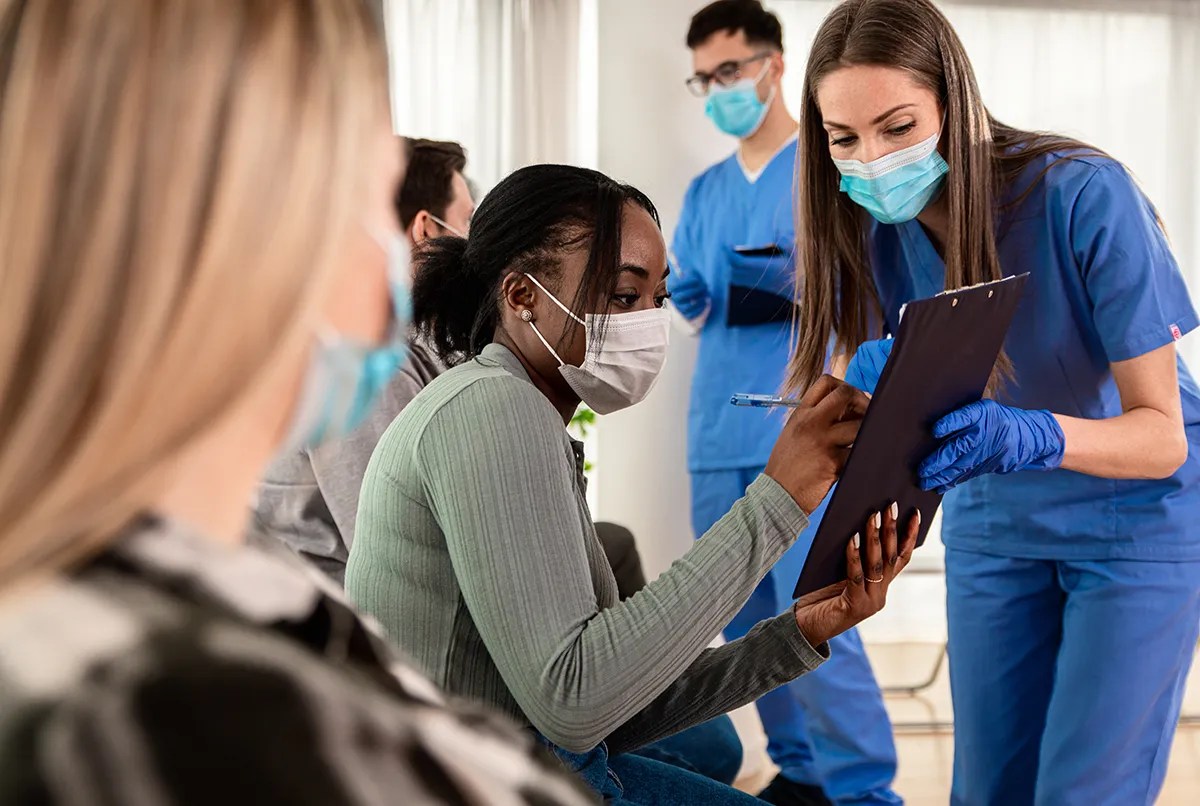
Patient-centered interviewing focuses on the patient’s needs and perspectives throughout the documentation process. Documenting patient interviews effectively comes down to a few simple things:
- Accuracy
- Structured format
- Completeness
- Timeliness
- Compliance/HIPAA
You are gathering data for the healthcare team, so don’t be afraid to ask pertinent questions during patient interviews. Being curious and thorough helps you collect the information needed for quality patient care.
Key information to capture during patient interviews includes:
- Reason for visit
- Associated symptoms
- Social history
- Medical history
- Surgical history
- Allergies
- Hospitalizations
- Family medical history
- Current medications
- Other conditions
If balancing documentation with patient engagement is difficult, you may document in real time. However, explain to the patient that you’re interested in what they’re saying and need to get the information recorded. Take breaks between typing to make eye contact with your patient and avoid turning your back while typing as this gives dismissive body language.
Compliance with regulations and confidentiality is essential. Electronic medical records (EMRs) help maintain patient confidentiality and comply with HIPAA law. Always log out of your computer station when not in use and never show personal records to those not involved in direct patient care.
7. What questions help you gather accurate patient information?
Asking effective health history questions takes practice and, before you know it, you will have the questions memorized. Health history questions to ask include:
Present illness: Ask about details of the current symptoms, when they started, how they have changed, and any treatments done. Key questions include: “What brings you in for this visit? When did your symptoms start? Have they gotten better or worse? Have you had any complications?”
Past medical history: “Have you had any past surgeries or illnesses? Did this require hospitalization? When were you diagnosed? How is the condition being treated? Has it resulted in any disability?” Knowing the extent of previous conditions will help with outcomes. If previously hospitalized, you may request medical records to gather more information.
Medications and allergies: “Do you take any prescription medications? Do you take any over-the-counter medications?” Try to include the name, dosage, and reason patients take medications. It’s good to ask about non-prescription medications as these can cause adverse interactions with prescription medications. Getting a list of allergies is also crucial so that providers do not prescribe contraindicated medications. “Do you need emergency medications like albuterol or epinephrine?” This also confirms the severity of the allergy since these medications usually indicate anaphylaxis risk.
Family medical history: “Has anyone in your family been diagnosed with cancer, heart failure, high blood pressure, or diabetes? At what age were they diagnosed?” Some medical conditions can be passed down genetically, so family history is essential. If the patient is adopted, make note of that in the documentation.
Social history: “Do you drink alcohol, smoke, or use drugs? What is your typical diet? How do you relax? How do you handle stress? Do you exercise regularly?” Gathering social history helps us understand risk factors and lifestyle. Since social history questions can feel judgmental, preface them by explaining you’re gaining a holistic understanding of their lives and well-being.
Encouraging honest patient responses can be difficult during a first-time meeting because you have not had time to establish trust. Try saying something like: “I know going to healthcare visits can be difficult and sometimes embarrassing, but the more honest and accurate your answers are, the better we can help you.” Reassure them that all information remains confidential, even from spouses and partners.
8. How do you maintain professional boundaries during patient interviews?
Utilizing communication strategies with patients will help keep healthy boundaries during patient interviews. Using standardized assessment approaches will cut down on missed information, keep you organized, and help maintain professional boundaries. Professional boundary lines may be crossed when you begin a more personal relationship versus a therapeutic relationship. You must remain on the therapeutic relationship path.
Therapeutic relationships:
- Facilitate healing
- Promote positive change
- Clear boundaries
- Ethical guidelines
Personal relationships:
- Mutual interest
- Emotional support
- Companionship/shared experiences
- Flexible boundaries
Nurse-patient relationships are special because of the connections made. Both have a tendency to provide emotional support, but make sure to only focus on facilitating healing and helping patients with their personal issues, not yours. When you begin to share your personal experiences, this will shift the relationship into a more personal one.
Confidential and emotional responses may be discussed during patient interviews. Discussing serious issues regarding health can stir up many emotions, some of which may be hard to handle. It’s best to remain calm and stay emotionally regulated while speaking to patients. Once you begin to feel dysregulated, you need to remove yourself from the situation and take a moment to calm yourself before continuing.
Protecting patient privacy is part of your job as a nurse. Handling personal patient disclosures can be done several ways including EMRs and maintaining privacy laws. Remind the patient that concerns will be made confidential. Nurses are mandatory reporters of abuse and neglect, so if these issues arise during your interview, legally you must report it.
Regarding pediatrics, mandatory reporting includes admittance to abuse, neglect or suspected abuse. State laws vary for mandatory reporting so make sure to check on your state laws. Utilizing everything you have learned about supportive communication may save someone’s life. Knowledge of these patient interview tips will make you a better nurse. You are an important piece to the healthcare puzzle. Properly trained nurses are the glue that hold healthcare together.
Learn about AZCN’s BSN program and hands-on patient interaction preparation. Explore more essential nursing skills and discover what you’ll learn in our BSN program by reading more articles on our blog.
Author Bio:
Blog Author: Tessa Chatham, RN
Tessa is a MSN prepared Registered Nurse with over 15 years of adult critical care experience. Tessa is specialty certified with her PCCN. Tessa has won the Golden Stethoscope award which is considered a top nursing excellence award. When not practicing bedside nursing, she enjoys academic writing and is passionate about helping those affected by medical ailments live healthier lives. She is a mentor and lifecoach to the younger generation of nurses and has precepted countless new nurses over the years. She also graduated from Texas Christian University with a Bachelors of Science in Nursing degree and the University of Texas at Arlington with a Bachelor of Arts degree in Psychology and English.
References
Tian Y. (November 2023) A Review on Factors Related to Patient Comfort Experience in Hospitals. Journal of Health, Population, and Nutrition. 42(1):125. DOI: 10.1186/s41043-023-00465-4. PMID: 37941052; PMCID: PMC10634154.
Loos NM. (2021) Nurse Listening as Perceived by Patients: How to Improve the Patient Experience, Keep Patients Safe, and Raise HCAHPS Scores. The Journal of Nursing Administration. 51(6):324-8. DOI:10.1097/NNA.0000000000001021
Motter, T., Hassle, D., Anthony, M.K. (March 26, 2021) The Art of Nursing Becomes a Celebration of Nurses. The Online Journal of Issues in Nursing Vol. 26, No. 2.
O’Rourke, M. (November 1, 2024) Professional Role Visibility in Real Time During the Nurse-Patient Interaction. American Nurse Journal. 19(11). DOI: 10.51256/ANJ112448
Slade S, Sergent SR. (April 2023). Interview Techniques. National Institute of Medicine: StatPearls. StatPearls Publishing; Available from: https://www.ncbi.nlm.nih.gov/books/NBK526083/
Start Your Future in Nursing Today
If you’re considering a career as a registered nurse (RN), Arizona College of Nursing is here to help you pursue your dream. Our BSN program enables you to earn a Bachelor of Science in Nursing in just 3 years or less with qualifying transfer credits. We’ve helped hundreds of students to earn a BSN degree and enter the nursing profession – and we’re ready to support you on your path to becoming an RN.
Why Choose Arizona College of Nursing?
- Earn a BSN degree in 3 years or less with eligible transfer credits
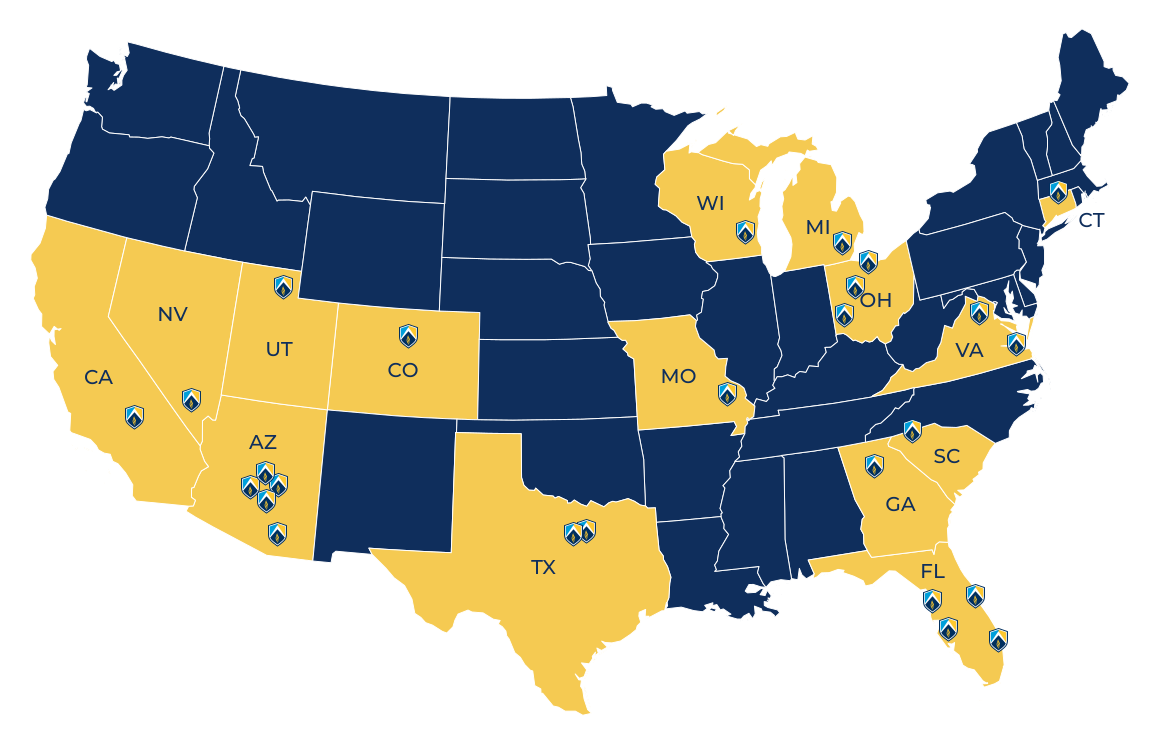
- Campus locations throughout the US
- Night classes for general education courses
- Hybrid Online/In-Person format for general education classes
- Nursing education is all we do
- CCNE-Accredited Program*
- NCLEX-RN success coaches and exam preparation class
- Financial aid available to those who qualify
Discover Your Path to a Career in Nursing
Information in this post is accurate as of September 17, 2025.
*The Bachelor of Science in Nursing (BSN) degree program at Arizona College of Nursing is accredited by the Commission on Collegiate Nursing Education (https://www.aacnnursing.org/). All Arizona College of Nursing and Arizona College campuses are institutionally accredited by the Accrediting Bureau of Health Education Schools (https://www.abhes.org/), a U.S. Department of Education-recognized accrediting agency.